Dear Friends of Kingston Inner Harbour,
Thank you so much for continuing to subscribe to my newsletter. This issue is especially exciting.
LOCAL NEWS, ISSUES AND EVENTS
1. Exciting New Inner Harbour Project: Building a Replica of the ‘Frontenac’?
2. Open Houses and Community Meeting re New Official Plan, Integrated Mobility Plan, + Water & Wastewater Master Plans and Pollution Prevention and Control
3. Kingston-area Schools Benefit from Federal, Provincial Food Funding.
4. Urban Expansion and Proposed Developments
5. Both Cardinal and Crow Selected as Kingston’s Official Birds
6. Grades 5 & 9 ActivPass for Free Access to Recreation Facilities at Designated Times
7. City Warns of Scam Text Messages about Traffic Camera Charges
8. Kingston In-water Construction Company Fined over $40K for Water Resources Act Violation
9. Kingston Museum Curator Recognized for Preserving Great Lakes History
10. Apply to Join City Committees, Boards and Commissions
FROM FARTHER AFIELD
11. intense Groundwater Flow Destabilized Ice in North America’s Great Lakes, Simulations Show
12. Transport Canada Funding to Address Underwater Vessel Noise Impacts on Marine Animals
13. ‘Invisible Force’ Draining Great Lakes Now Has a Measurement Showing Why Water is Disappearing.
OF GENERAL INTEREST
14. History of Cataraqui River: Wikipedia
15. The Political Case for Rooftop Solar
16. How Mark Carney and the Baby Boomers Can Save Canada
17. Green Turtle Bounces Back from Brink of Extinction.
18. How Canada’s National Observer Tracked a Climate Misinfo Group Gound ‘Under the Radar’
19. Glysophate in Tampons – Petition
20. Canadians See Nature as our Greatest Economic Advantage
21. Tardigrades: Fascinating Tiny Creatures that Exist Everywhere.
22. History of the Ribbon Skirt
23. Wildlife Crossings Initiative: Helping Animals Cross the 401 Safely
LOCAL NEWS, ISSUES AND EVENTS
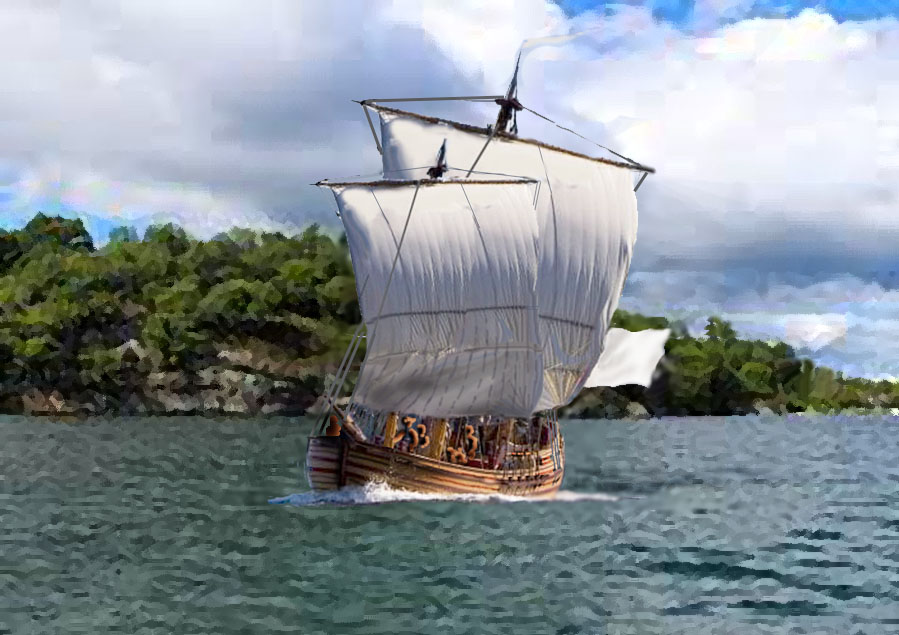
1. Exciting New Project: Building a Replica of the ‘Frontenac’?
Can we join together to celebrate Kingston’s French heritage as well as early trade partnerships between the French and Indigenous peoples? Let’s give it our best shot!
The Frontenac, pictured above, was the first European-style sloop to be built on the Great Lakes. Thanks so much Peter Rindlisbacher for the beautiful pictorial rendition.
The Frontenac was built in Kingston’s Inner Harbour in 1678. 2028 will be the 350th anniversary – a great opportunity to celebrate 350 years of historic boat building in Kingston’s Inner Harbour – actually CANADA’S OLDEST CONTINUOUS HISTORIC BOAT BUILDING LOCATION.
Boats and waterways have been crucial to what has become Canada.
In 2020, we celebrated Kingston’s Indigenous heritage with a community build of a traditional Algonquin birchbark canoe, led by Algonquin Traditional Knowledge Keeper, Chuck Commanda. It was a deeply meaningful coming together of Indigenous and non-Indigenous in the spirit of Truth and Reconciliation.
This time, our lead builder would be Mike Corrigan, Gananoque’s Master Boat Builder.
https://www.facebook.com/thewoodenboatshop
In addition to celebrating our Indigenous heritage, our dream is to celebrate the contributions of both the French and French Canadians to Kingston’s history and the history of Canada. These stories and histories have largely been buried under British Loyalist history and Sir John A.
As part of this project, we would continue celebrating the much older long-standing Indigenous use of the site, as well as Indigenous contributions to Canadian history through trade relationships that could not have happened without Canada’s most amazing boat – the birchbark canoe.
For this dream project, we consider it essential to work with support from Kingston’s Indigenous communities, Kingston’s French community, the City of Kingston, MetalCraftMarine, and other maritime and educational groups. We will not proceed if these groups find the project offensive in any way.
If you are interested in learning more and/or getting involved as a volunteer in any capacity (e.g. organization, fund raising, donating, accessing materials, building etc), please contact Mary Farrar at inverarymary@yahoo.com. We would love your enthusiastic participation
2. Open Houses and Community Meeting re New Official Plan, Integrated Mobility Plan, + Water & Wastewater Master Plans and Pollution Prevention & Control
Received from the City of Kingston Oct 1, 2025
The City Invites Your Participation and Comments
The City of Kingston has three important projects underway to provide a coordinated framework to support growth and build a complete, sustainable and well-connected city. You are invited to participate.
- The new Official Plan project will establish a long-term vision and policies to guide how the city will grow and evolve over the next 25 years. It will direct where homes, jobs, parks, and community services are located, outline infrastructure requirements for growth, and set policies to protect people and property from hazards while enhancing the city’s natural environment and cultural heritage resources.
The City invites residents to review the First Draft of the new Official Plan and to share their feedback and vision for future growth. Project information, including a copy of the First Draft, is available online at www.cityofkingston.ca/YG200K. - The new Integrated Mobility Plan project will shape how people and goods move throughout the city by planning for future transit, cycling, walking, and road networks. For information about the Integrated Mobility Plan project, please visit www.cityofkingston.ca/YG220K.
- The new Water & Wastewater Master Plans and Pollution Prevention & Control Plan project will identify the infrastructure upgrades and expansions needed to support projected growth and protect public health and the environment. For information about this project please visit https://utilitieskingston.com/Projects/Detail/WWWMasterPlans2025.
Rural Open House: Mon, Oct 20
A Rural Open House will be held to present information, answer questions and collect feedback on rural-focused topics contained within the First Draft of the new Official Plan, such as agriculture, rural businesses, rural housing and hamlets. The Rural Open House will be held:
- Date: Monday, October 20, 2025
- Time: 6 to 8 pm
- Location: Sunnyside Hall, Cataraqui Community Centre, 1030 Sunnyside Road
Open House and Public Information Centre: Wed. Oct 22
An Open House and Public Information Centre will be held to present information, answer questions and collect feedback on the new Official Plan and the new Water & Wastewater Master Plans and Pollution Prevention & Control Plan projects. This session will also include updates on the Integrated Mobility Plan (IMP), ahead of a dedicated Public Information Centre in November. The Open House and Public Information Centre will be held:
- Date: Wednesday, October 22, 2025
- Time: 6 to 8 pm
- Location: Ambassador Ballroom, DoubleTree, 1550 Princess St, Kingston
Community Meeting: Thurs, Oct 22
A Community Meeting will be held at Planning Committee, dedicated to sharing details, answering questions and gathering feedback on the First Draft of the new Official Plan. The Community Meeting will be held:
- Date: Thursday, October 23, 2025
- Time: 6 pm
- Location: Hybrid meeting with the following in person or virtual options:
- In person: Council Chambers, City Hall, 216 Ontario Street
- Online (virtual): To register to attend virtually, email Christine O’Connor, Committee Clerk, at cloconnor@cityofkingston.ca
The Planning Committee will receive a Community Meeting report with respect to the First Draft of the new Official Plan, which will be available online on October 17, 2025 on the City of Kingston’s website at www.cityofkingston.ca/PlanningCommittee. Anyone who attends the Community Meeting may speak about the First Draft of the new Official Plan and ask questions. Written comments may also be submitted. No recommendations or decisions are being made at this time.
Additional information about the new Official Plan project, including a copy of the First Draft policies and mapping can be viewed online at www.cityofkingston.ca/YG220K.
Contact: Laura Flaherty, Project Manager, Planning Services via:
Mail: 216 Ontario St., Kingston, K7L 2Z3
E-mail: lflaherty@cityofkingston.ca
Telephone: 613-546-3157
3. Kingston-area Schools Benefit from Federal, Provincial Food Funding
Received from the Kingston Whig Standard, Oct 16, 2025
The Food Sharing Project, which provides meals to 88 schools across Kingston, Frontenac, Lennox and Addington, expects funding increases after the federal government pledged to boost the budget for the National School Food Program in its budget next month.
The provincial government also announced a $5-million increase to its Student Nutrition Programs.
“Funding from the National School Food Program started to flow to us last January and it has been transformational, allowing us to move to the next level of school food support,” Brenda Moore, chair of The Food Sharing Project, said in a news release.
Each week, volunteers with The Food Sharing Project pack nine tons of food into more than 450 boxes, which are delivered to schools where school staff and volunteers prepare snacks and meals for any student who needs healthy food.
The weekly food distribution is worth about $25,000.
“The reality is that educators, teachers and educational assistants have very limited time outside of their classroom responsibilities to make sandwiches, toast bagels or cut up fresh fruit and vegetables. It is heart-breaking for them because they are in tune with the needs of their students and they know that kids are going hungry, every day at their school.”
Moore said she hopes the provincial government’s $5-million addition will be the first of a phase-in effort to bring Ontario up to the level of other provinces and territories.
4. Urban Expansion and Proposed Developments
Received from Yvonne Hiemstra via Kathleen O’Hara Oct 10, 2025
Dear Planners, Mayor Patterson and City Council;
Having attended the community meetings on the proposals for development of 1054 Hwy 2 and 790 Hwy 2 last week, I have 2 important issues to ask you to reflect on. As it stands now, I am completely against these proposals on the basis of the following points.
- I think I can speak for the residents including myself as to why we moved to this area in the first place. It is for the bucolic, rural environment, natural heritage and the peacefulness. One man mentioned the fact there were cows grazing on this land when he moved here in the early 70’s. This is evidence of how much this area has changed over the last 50 years and clearly, this is what many residents bought into when they moved here. Slowly, there has been more development in the past decades but it has been manageable and not to the intensity that is being considered now. We do not want to live in a subdivision or would have chosen another area altogether. We are VERY concerned that our way of life will be lost with these two developments. There is much upside for developers and potential residents but literally nothing but downside for current residents in these proposals.
- Housing and traffic congestion – The proposal for 1054 estimates some additional 9,000 residents which would approximately equate to 5000 additional vehicles plus commercial and retail spaces. Similarly, 790 advertises a range of low-rise, mid-rise and high-rise housing options This will represent several 1000 more vehicles. Concerns were raised as to new roads and widening of Hwy 2 plus stop lights or even traffic circles to manage the flow. It was not clear who pays for the infrastructure that is not there currently but it is assumed it will be taxpayers. Concerns were raised about the congestion created on the temporary Lasalle Causeway. Some were concerned with how they would get to the new (north-west) hospital in an emergency with added congestion. Plopping high-rises in the middle of a rural environment is totally incompatible. To current residents who value the rural quality of life, it is NOT what they want. Whose rights take priority? Current or potential residents? The answer should be clear.
- The Base as a buffer? – Many of us probably thought that the Base would buffer us from the mass developments that have happened along Hwy 15 or the west end but now it is coming for us. Do we have to move further afield to get away from this? This would seem to be a perpetual issue. Almost no where appears to be safe.
- Destruction of natural heritage – What are we willing to sacrifice for more housing? We have not finalized the Natural Heritage Study yet or the New Official Plan and here we are already looking to destroy parts of it before determining what needs to be saved (see photos attached). Clearly there will be habitat lost and the biodiversity is going to be compromised with these proposed developments. In the context of the climate crisis, this is especially concerning. When we need to preserve our natural heritage the most, it appears that we are prepared to turn a blind-eye. As everyone knows, preserving forests, woodlands, wetlands and natural areas that regulate temperature, clean air and water, prevent flooding and support wildlife are the key mitigating factors to the negative effects of a warming climate. Every time we move the urban boundary, it opens the flood gates to destruction of natural heritage. There will be more and more accidents and roadkill as a result. No one wants this. It would seem that we have many overlapping projects happening all at once that need to be properly separated and considered in advance of any decisions being made.
- Salt of the Earth farm market eliminated or displaced – Many of us rely on the fresh produce that is offered at the Salt of the Earth CSA (Community Supported Agriculture) market. It has become a key service and local food security for this community. This is the retail we embrace. It is a rural approach to connecting with the land that provides for us. What will happen to it? We don’t care to have another Starbucks nearby.
- Residents constantly forced to defend their way of life in the face of construction companies development proposals – In general, the approach whereby an urban boundary can be “amended” or pushed out by a developer while existing residents need to constantly be defending their way of life is both transactional and backwards. Definitely not strategic. You just have to look at all the new development proposals that have come flooding in to the City once it was announced there would be a new official plan. Developers can smell opportunity better than anyone else. And they have deep pockets for their lobbyists. This is a great frustration felt by many people no matter where they live in Kingston. The fact that the actual residents of Kingston and taxpayers are not seen as the drivers of decisions is disrespectful. It’s the tail wagging the dog. It is no secret what developers want. It’s to make money. I don’t think there is much philanthropy involved. They care little about what existing residents want other than to attempt to coerce them into complying with their wishes. Their goal is to push through their projects. So…..whose side is the City of Kingston on? If residents don’t trust the City management, it is because of these types of issues. How many times have we been through this? Many of us feel that we are going to be railroaded anyway.
- The process of overlapping projects including the Natural Heritage Study, the New Official Urban Plan, and reacting to Developers proposals is flawed. As I’ve said above, where do the existing residents fit into this equation? It feels like developers drive the decisions at City Hall even though residents are the ones paying the taxes. Residents are, or at least should be the most important stakeholders yet we feel ignored or worse patronized by City Hall. We hold community information sessions and public consultations but they seem like lip-service to our concerns. By starting the process with reacting to amendment applications, it feels like decisions have already been made. The City being prepared to accept them in the first place is wrong. This is what creates frustration and lack of trust in the authorities and the process. It appears that input from residents has rarely stopped a project. This is not good faith.
- Decision about population growth in Kingston NOW? I believe that this case has not been sufficiently made since it dates back to 2023 in a very different economic climate and there are only 2 census reports to support this growth scenario. Why can’t we wait to at least the 2026 census which is right around the corner for a 3rd data point? Yes, the City has seen growth…… but currently, there are houses sitting empty on the real estate market and nothing seems to be moving. This is a recent phenomenon. In the face of radically reduced immigration, where exactly are all these people coming from that are expected to move to Kingston? That question has not been answered.
- Get the sequence of events right – In this situation, the first order of business should be finalizing the Natural Heritage Study and sharing the full report with all concerned. This should be a process separated from urban boundary discussions and certainly proposed developments. Let’s look at this in an objective way between City planners and residents. No developers are welcome to the discussion about our natural heritage and the value this brings to the biodiversity, residents, our City and the climate problem. We need to hammer out with the real stakeholders, what we MUST save and where potential development might take place. We know this is a balancing act but we need to save as much of our woods, forests, wetlands and natural spaces and habitat where it currently exists and also grade A farmland for food security. We pave over these lands at our peril and will NEVER get them back. This is purely a discussion between the City and residents and we must both agree on this going forward. This is the first step.
- Redrawing the urban boundary (if necessary) based on our Natural Heritage – The “new” urban boundary (if appropriate) and by extension the New Official Urban Plan will then be informed by what is agreed to in the discussions between the City and residents (per above). Again, this does not require the involvement of developers. This is a strategic step driven by the City and residents only. This is the second step.
- Reject development proposals that attempt to force expansion of the urban boundary – It is absurd to me that the City even entertains these amendment applications to the urban boundary from developers. We have rules on where the urban boundaries are. If the development proposal doesn’t respect that it must be handed back to the developer to comply. End of story. The fact that the City allows these applications to go forward immediately puts everyone into react mode. This is not strategic. Developers must not be the ones driving urban boundaries. How are any of us (including City planners) supposed to react to what appears to be random development proposals plunked down in non-contiguous areas that are outside the urban boundary and incompatible with the existing environment? With all the proposals that have come forth, it is impossible to deal with all of them in a consistent and thorough way. How is it decided to go forward with any of them? Are their criteria established to fulfill? There must be rules. The first thing should be complying with the urban boundary. This would be the third step in the process and it would make everyone a lot happier with how it is handled. Furthermore, ensuring a compatible development in terms of density and type should be criteria to meet. No high-rises in a fundamentally rural area.
I welcome any input or feedback to my concerns.
Thank you for considering these important issues as the City, in concert with resident taxpayers, find a path forward that satisfies everyone.
Yvonne Hiemstra
District 1 – Countryside, K7L 4V1
Yhiemstra1588@gmail.com
5. Both Cardinal and Crow Selected as Kingston’s Official Birds
Received from the Kingstonist Oct 14, 2025
Top birds were:
Cardinal & Crow: 339 votes each
Red-winged Blackbird: 140 votes
Blue Jay: 104 votes
Mourning Dove: 91 votes
Both cardinal and crow selected as Kingston’s official City Bird – Kingston News
Editor’s Comment: Really fun CBC Interview on the subject with Chris Hargreaves of the Kingston Field Naturalists on All in a Day with Alan Neal.
https://www.cbc.ca/listen/live-radio/1-92-all-in-a-day/clip/16175288-meet-crow-cardinal-kingstons-offical-bird-duo
6. Grades 5&9 ActivPass for Free Access to Recreation Facilities at Designated Times
Received from Kingston Gets Active, Oct. 1 2025
What is the ActivPass?
The Grade 5 and 9 ActivPass gives students FREE access to recreation facilities at designated times.
From October 2, 2025 through August 31, 2026, grade 5 and 9 students in public and private schools in the greater Kingston area can use their ActivPass. To access facilities, Grade 5 students show their physical activity pass, which they receive at school, and grade 9 students show their student identification card or an ActivPass, which can be picked up in their school office.
Students can enjoy activities such as swimming, ice skating, curling and use of gymnasiums or fitness centres at participating organizations.
https://kingstongetsactive.ca/resources/grade-5-9-activpass/
7. City Warnes of Scam Text Messages about Traffic Camera Charges
Received from the City of Kingston Sept 25, 2025
The City has received reports of fraudulent text messages claiming to be about traffic camera-related charges. These messages include a link and threaten negative consequences if the recipient does not act immediately.
Please be aware that the City does not send text messages about camera charges or any other Provincial Offences matters. Tickets are always mailed to the registered owner of the vehicle.
If you receive a suspicious text, do not click any links and do not provide personal or financial information.
If you believe you have been targeted by a scam, please contact Kingston Police at 613-549-4660 or visit
https://www.kingstonpolice.ca/crime-prevention-and-safety/frauds-and-scams/
8. Kingston In-water Construction Company FIned over $40K for Water Resources Act Violation
Received from the Kingstonist, Setp 25, 2025 – Jessica Foley
Basically, shoreline work done by Inner Harbour Marine Services Limited on a Treasure Island site did not ensure proper erosion and sedimentation control measures.
https://www.kingstonist.com/news/Kingston-in-water-construction-company-fined-over-40k-for-water-resources-act-violation/?utm_source=ygktoday.beehiiv.com&utm_medium=newsletter&utm_campaign=Kingston-traffic-clash-ma.
9. Kingston Museum Curator Recognized for Preserving Great Lakes History
Received from the Kingston Whig Standard, Sept 25, 2025 – Bill Hall
Doug Cowie, curator of the Great Lakes Museum (GLM) in Kingston, has been awarded the prestigious C. Patrick Labadie Award for Historic Preservation.
The award, presented annually by the Association for Great Lakes Maritime History, recognizes individuals who have made significant, long-term contributions to the preservation of Great Lakes maritime history.
Cowie was unanimously selected by the association’s judges for his “exceptional leadership” at the GLM from 2016 to 2024, particularly for his role in securing the donation of the museum’s building and historic dry dock from a local philanthropist, Arthur Bitton Smith.
The Great Lakes Museum occupied its 55 Ontario St. location from 1976 until 2016, when the federal government sold the historic property to a private developer. This forced the museum to temporarily relocate to a small storefront gallery at Portsmouth Olympic Harbour.
Because of the efforts of Cowie and the board of directors, the museum eventually reclaimed its original location in 2019.
With 34 years of experience in the marine industry, Cowie continues to hold a seat as a member of the board of directors of the Kingston Association of Museums (KAM).
Cowie accepted the award in Wisconsin on Saturday, Sept. 6, during the Association for Great Lakes Maritime History’s 2025 annual general meeting, according to a news release.
“To be honest, (the award) should be shared with many involved in the Great Lakes Museum’s progress over the past eight years,” Cowie said. “What a roller coaster ride it’s been. The Association for Great Lakes Maritime History is an important organization that the Great Lakes Museum and research community value greatly, so I am very flattered and appreciative to be recognized for making a contribution to its goals.”
Recently, Attractions Ontario recognized the GLM as Ontario’s top small museum.
10. Apply to Join City Committees, Boards, and Commissions
Received from the City of Kingston, October 17, 2025Kingston residents, your ideas and experiences can directly influence City decisions and priorities.
Serving on a municipal advisory committee, board or commission is a unique opportunity to bring your perspective to local issues, collaborate with other residents and City Council, and contribute to more inclusive, thoughtful and community-driven decisions.
“We value the experience, knowledge and ideas residents share. They help ensure the City’s work reflects the needs of the people who live here,” says Deputy City Clerk Derek Ochej.
Applications for committees are open from Oct. 17 to Nov. 7. Eligible residents may apply for the following:
- Equity, Diversity, and Inclusion Advisory Committee (youth representative + resident representative)
- Housing and Homelessness Advisory Committee (youth representative)
- Municipal Accessibility Advisory Committee (youth representative + resident representative)
- Rural Economic & Community Development Working Group (youth representative)
- Kingston & Frontenac Housing Corporation Board
- Kingston Heritage Properties Committee
- Kingston Area Taxi Commission
Find specific mandates for each at CityofKingston.ca/Committees.
To be eligible to serve on most committees, boards or commissions you must be 18 years or older, a resident/business owner in the City of Kingston and a Canadian Citizen or Permanent Resident. Youth representatives must be aged 15-24.
Submit Your Application
- Online at CityofKingston.ca/Committees
- By phoning 613-546-0000 to request a paper application. We will provide a postage-paid envelope to return the application to City Hall.
- In person at City Hall, 216 Ontario St. in the City Clerk’s Department.
Applications close at 4 p.m. on Friday, Nov. 7, 2025.
For more information on the application process or committees, boards and commissions, contact the City Clerk’s Office at CityClerk@CityofKingston.ca.
FROM FARTHER AFIELD
11. Intense groundwater flow destabilizes ice in North America’s Great Lakes, simulations show, Phys. Org, September 26, 2025. Powerful pulses of groundwater flow up from beneath Lakes Michigan and Huron, which together form one of the largest freshwater systems in the world. This groundwater flux may dramatically alter how and where ice forms, with important implications for ice-climate models. As climate change pressures the system, new research suggests that conventional models may underestimate how groundwater can destabilize lake ice along its shorelines (coasts).
12. Transport Canada announces funding to address underwater vessel noise impacts on marine mammals – Canada.ca
Received from the Government of Canada Sept 25, 2025
Indigenous communities share ties to Canada’s coasts that span generations. Through the Quiet Vessel Initiative, the Government of Canada is providing funding to coastal Indigenous communities in southern British Columbia to better understand and reduce underwater vessel noise and protect the marine environment.
Today, the Minister of Transport and Leader of the Government in the House of Commons, the Honourable Steven MacKinnon, announced $2.8 million in funding, through the Quiet Vessel Initiative, for seven Indigenous communities along the Trans Mountain Expansion Project marine shipping route. This important initiative is supporting underwater noise measurement in local territories with the goal of lessening acoustic disturbances to endangered marine mammals.
Building our understanding of Canada’s environment and ecosystems, allows us to strengthen our economy, while also safeguarding endangered marine mammals.
13. ‘Invisible force’ draining Great Lakes now has a measurement showing why water is disappearing, MLive, September 26, 2025. The Great Lakes water levels are declining right now. Here’s a look at the few factors causing the water levels to go down.
OF GENERAL INTEREST
14. History of Cataraqui River: Wikipedia
The Cataraqui River (/ˌkætəˈrɒkweɪ/KAT-ə-ROK-way) forms the lower portion of the Rideau Canal and drains into Lake Ontario at Kingston, Ontario. The name is taken from the original name for Kingston, Ontario; its exact meaning, however, is undetermined. Early maps showed several name variations including the Great Cataraqui River and Grand River Cataraquay. The river was once called Riviere de Frontenac, or Frontenac River.[2] The alternate spelling “Cadaraqui” also appears in some historic texts.[3]
A portion of the Cataraqui River that significantly widens north from Charon Point is also known as River Styx.[4]
The Cataraqui Region Conservation Authority administers water management concerns within the Cataraqui River watershed.
History
Prior to the Rideau Canal being built (1826 – 1832), the Cataraqui River had its headwaters in Dog and Loughborough Lakes.[5] It was a meandering creek, a 1795 map (by surveyor Lewis Grant) noted “a great number of rapids and Carrying Places on this creek.” This changed with the building of the Rideau Canal. The Superintending Engineer of the project, Lt. Colonel John By, used a slackwater construction technique, building dams to drown rapids. In the area of the Cataraqui Creek from Upper Brewers to Kingston Mills he had the forests cut down to form a straight channel (this work is visible in the Burrowes paintings of Brewer’s Lower Mill shown below). The area was then flooded in late 1831/early 1832 with the completion of canal dams at Kingston Mills, Lower Brewers and Upper Brewers.
Today the watershed of the Cataraqui River includes lakes south of the watershed divide at Newboro, such as Sand, Opinicon, Clear and Newboro. However, in the pre-canal era, water from those lakes flowed into the White Fish River which drained to the Gananoque River rather than the Cataraqui River. The section between those two rivers was the Cranberry Flood Plain; the only water contribution from the White Fish River to the Cataraqui was in times of spring flood. This changed in the early 1800s with the building of a mill dam by Lemuel Haskins at White Fish Falls, near today’s village of Morton. That dam retarded the outflow of the White Fish River to the Gananoque, backed it up over the Cranberry Flood Plain, sending water south to the Cataraqui River. To stop the escape of his mill water down Cataraqui Creek, Haskins built a second dam at the Round Tail (just north of Upper Brewers) which blocked the channel of the creek. These two dams made the Cataraqui Flood Plain navigable for the first time.
When the Rideau Canal was built, Haskins’ dam at Morton was enlarged and a new dam was built at Upper Brewers. Those two dams (managed today by Parks Canada) created Whitefish Lake, Little Cranberry Lake and much expanded Cranberry and Dog lakes. Most of the flow from what was previously the White Fish River watershed now flows down the Cataraqui River.
15. The Political Case for Rooftop Solar: Climate News
Received from Canada’s National Observer, Oct 2, 2025 – Max Fawcett
https://www.nationalobserver.com/2025/10/02/opinion/political-case-rooftop-solar?nih=BJJovmnEj7wwdZHrWoMnPskvsVWVND6hIm1ja-lFyP8&utm_source=National+Observer&utm_campaign=0288d260c5-EMAIL_CAMPAIGN_2025_10_02_01_24&utm_medium=email&utm_term=0_cacd0f141f-0288d260c5-277300613
From China and India to Europe and Africa, solar power is in the process of radically transforming the global energy system. It’s bringing cheap (and ever-cheaper) energy to the places that need it most, allowing countries that have traditionally relied on imported oil and gas to imagine a future where they don’t have to anymore. Why? Well, as political strategist James Carville might say, it’s the economics, stupid.
In North America, though, the politics are getting the last word right now. Climate advocates are contending with an American president who describes climate science as a “scam” and continues to treat renewable energy as a bigger threat to his country’s security than Russia or China. But they’re also faced with a well-meaning and environmentally literate Canadian prime minister who keeps removing or diluting key pieces of their own country’s climate policy architecture in order to stave off political defeat. In both cases, the absence of a viable and vocal political constituency supporting low-carbon technology is making their respective jobs easier.
That’s why, although economists have largely dominated the conversation about climate policy in Canada over the last decade or so, it’s time — past time, really — for the political scientists to take the reins. The conversation around rooftop solar is a perfect example of why, and how, this shift needs to happen.
Economists will tell you rooftop solar isn’t competitive in Canada, and they’d be right. According to the 2024 edition of Lazard’s Levelized Cost of Energy Analysis — the most popular way to compare the cost of different energy technologies — the most expensive utility-scale solar or onshore wind project is still cheaper than the cheapest rooftop setup. “Both the capital costs and the operating costs of rooftop solar on small buildings like residential homes are just not competitive with large-scale solar,” climate scientist and entrepreneur David Keith said in a recent podcast. “People should be free to do it but I don’t think we should give them special incentives.”
This is both technically correct and dangerously wrong, since it misunderstands the real obstacle standing in the way of more widespread adoption of low-carbon technology. Most people barely understand where their electricity comes from, never mind the impact that competing sources and technologies can have on their monthly bills. That’s especially true when you have politicians and pundits deliberately muddying these already cloudy waters in the service of incumbent industries and their interests. Utility-scale solar may be cheaper, but it does almost nothing to advance the popularity of the underlying technology or increase the size of the political constituency supporting it.
I am reminded here, as I have been before when writing about climate policy, of Niccolò Machiavelli’s theory of change. “It ought to be remembered that there is nothing more difficult to take in hand, more perilous to conduct, or more uncertain in its success, than to take the lead in the introduction of a new order of things,” he wrote. “Because the innovator has for enemies all those who have done well under the old conditions, and lukewarm defenders in those who may do well under the new.”
Given the inherent complexity of (and in) our electricity system, it’s asking a lot of people to understand the relationship between their electricity bill and the cheaper electrons being generated by a solar array located many kilometres away from their home or business. But if they have a solar array on their roof, and can see the positive impact it makes every month? Well, now you have someone who might advocate for solar when the conversation comes up next — and push back against bogus claims about it from fossil-fueled politicians.
Rooftop solar is inefficient and expensive compared to to utility-scale renewable energy. Here’s why progressive politicians should aggressively subsidize it — and other consumer-facing clean technologies — anyways.
Yes, it’s true that subsidies for rooftop solar arrays, electric vehicles, and heat pumps aren’t the most cost-effective way to deliver emissions reductions. But if there’s one lesson progressive politicians should take to heart from the last decade it’s that the durability of their climate policies is more important — way, way more important — than their economic efficiency. They have to constantly be expanding the universe of people who have personally benefited from said policies, not just appealing to the tiny handful of environmental economists in the country. At this point, the cost of the emissions reductions is far less important than the cost of failing to deliver them.
This is where the Carney government should be focusing its efforts. In addition to strengthening the industrial carbon price, it has to create a connection for Canadians between climate policy and their own self-interest. By stimulating and supporting demand for clean technologies that sit on people’s rooftops or in their driveways, the federal Liberals can create a larger constituency for climate policy than they ever did with the carbon tax — rebates and all. That constituency will cut across rigid partisan lines, and its existence will make it more difficult for any future government to roll back the policies.
It won’t guarantee the survival of climate-friendly policies, if only because the antipathy towards them among Conservatives is so high right now. But at least it gives them a fighting chance — and, more importantly, a community of self-interested voters that will actually fight for them.
16. How Mark Carney and the Baby Boomers Can Save Canada
Received from Canada’s National Observer, Aug 18, 2025 – Max Fawcett
How Mark Carney and the babyboomers can save Canada | Canada’s National Observer: Climate News
17. Green Turtle Bounces Back from Brink of Extinction
Received from BBC, October 10, 2025 via Adam Malus. Thanks so much.
http://www.bbc.com/news/articles/cg426qqqqnro
18. How Canada’s National Observer Tracked a Climate Misinfo Group Found ‘Under the Radar’
Received from Canada’s National Observer, Oct 8, 2025
How Canada’s National Observer tracked a climate misinfo group going ‘under the radar’ | Canada’s National Observer: Climate News
19. Glysophate in Tampons – Petition
Received from Martine Bresson. Thanks so much.
An explosive new study has just found toxic glyphosate in period products at *40 times* higher than the legal limit for drinking water.Glyphosate is linked to cancer, dementia, fertility issues, and more – and it’s especially dangerous if it’s found in tampons because it allows this poison to be absorbed directly into the bloodstream.
Period products are a necessity for MILLIONS of women, girls, and people who menstruate. Now, they could be at risk of exposure to chemicals linked to life-threatening illnesses.
Unbelievably, the UK government has no plan to fix this massive problem that could be affecting countless people…because barely anyone knows about this scandal.
But there’s already movement toward changing that, and together we can give the push new momentum with global public pressure that can force the government to act.
The UK could be a world leader in making period products safe to use, setting a global precedent – but they won’t take action unless we make them feel the heat. So let’s make our collective voice impossible to ignore:
Sign the petition: get glyphosate out of period products!
20. Canadians See Nature as our Greatest Economic Advantage
Received from David Coletto via Ken Fisher. Thanks so much.
| When Canadians think about the country’s economic future, they’re not just talking about technology or innovation, they’re increasingly looking to something more familiar: nature. Our latest poll with Canada’s Nature Advantage, finds overwhelming agreement that nature isn’t just worth protecting, it’s one of Canada’s most valuable assets. • 91% say nature is one of Canada’s greatest economic strengths. • 87% believe investing in nature builds long-term resilience. • 93% think Canada should position nature as a key part of its economic strategy. Even though few had heard the term nature-based solutions before, once explained, 85% support adopting them — from reforestation and wetland restoration to sustainable farming and urban greening. At a time when Canadians feel anxious about both the economy and the environment, nature stands out as a rare source of unity and optimism. It’s not a trade-off to them, it’s a way forward. You can read the full report here: https://abacusdata.ca/canadas-natural-advantage-a-path-to-economic-prosperity-and-climate-leadership/ David Colletto, Chairman and CEO of Abacus Data 21. Help Animals Cross HWY 401 Safely Frontenac Arch Safe Passage For generations, animals such as moose, black bears, and turtles have been on the move, instinctively crossing age-old pathways to find food, mates, and new homes. But we’ve bisected these movement patterns with roads, creating walls of fast-moving traffic and making it near impossible for animals to move safely. This has led to a significant increase in collisions between vehicles and wildlife, posing a serious threat not only to wildlife populations but also to driver safety |